Joint, T, L or Hex: A Simple Guide to Hydraulic Nipples
Hydraulic nipples rarely get much attention, yet they are the parts most often ordered by guesswork. Each shape does a different job, and choosing the wrong one usually shows up later as a leak, a strained hose or a circuit that runs hot. Here is what each type is for.
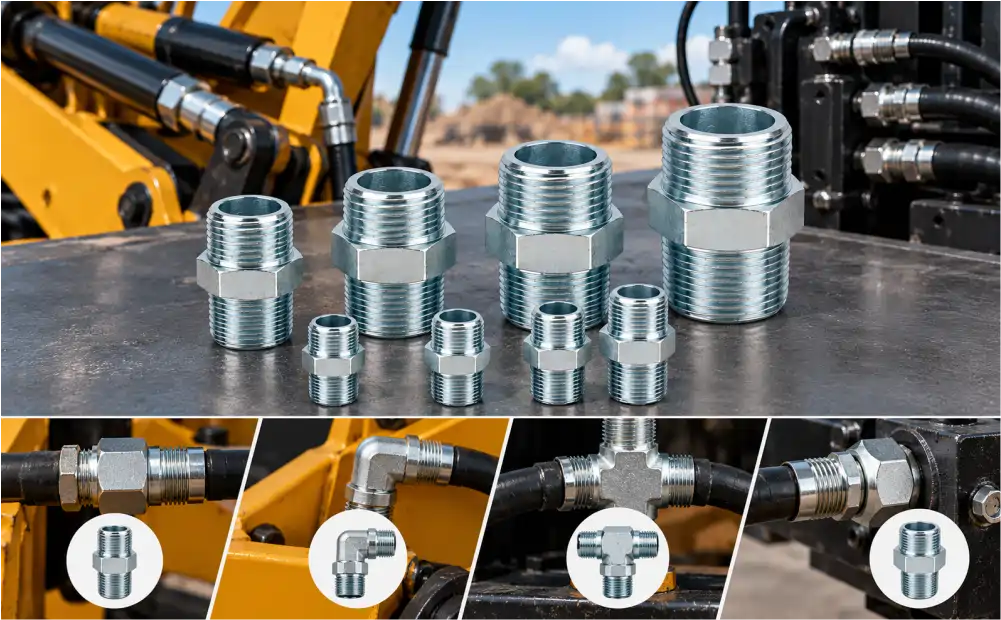
Joint Nipple
A straight connector that joins two lengths of pipe or hose into one line. Use it when you simply need to extend a run or reconnect a line that has been cut. The flow path does not change.
L Nipple
A 90-degree elbow that turns the line through a right angle. Its real value is not the turn itself but what the turn saves you: routing a hose around an obstruction without forcing a tight bend into it. A hose bent past its minimum radius fails from the inside out, long before anything looks wrong from the outside.
T Nipple
Shaped like the letter T, it splits one line into two. Use it where oil or air has to reach more than one component from the same source. Remember that both branches share the incoming flow, so size the T for the combined demand.
Hex Nipple
The hexagon in the middle is there for one reason: a spanner. On any joint that will be opened and remade during servicing, those flats are the difference between a five-minute job and a damaged fitting. They also let you tighten the nipple onto a proper, vibration-resistant seat instead of stopping at hand-tight.
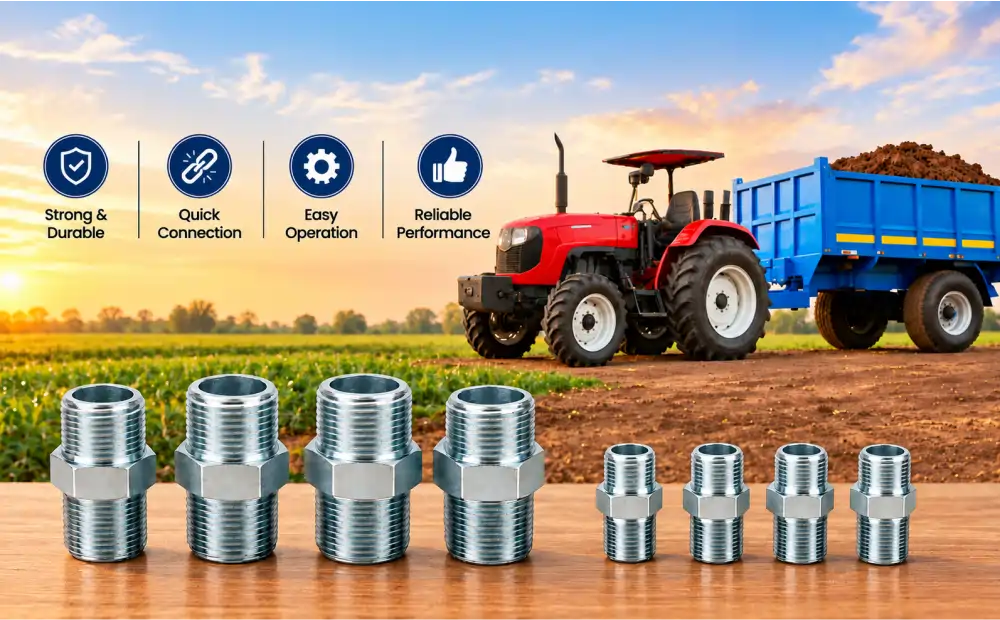
Small and Big
Beyond shape, bore size decides flow. A small nipple suits tight spaces and low-flow connections without giving up thread strength. A big nipple carries higher flow for heavier hydraulic and industrial work. Fit a small nipple into a high-flow line and you create a restriction that later shows up as heat.
The rule that covers all of them
Whatever the shape, the thread has to be right. We make our full nipple range at our own plant and gauge the threads before dispatch, so a batch you fit this year matches one you fitted three years ago.